
Overview
Dental health plays a critical role in maintaining a confident smile and proper oral function. However, teeth can become damaged over time due to decay, trauma, fractures, or wear. When a tooth becomes weak or structurally compromised, simple fillings may no longer provide sufficient support. In such cases, Dental Crown Treatment in Delhi becomes one of the most effective restorative solutions to protect and strengthen the affected tooth.
At Oraluxe Clinic, patients receive advanced dental care using modern restorative techniques designed to restore both the function and appearance of damaged teeth. Dental crowns are widely recommended by dental specialists because they offer long-term protection while preserving the natural tooth structure.
Understanding Dental Crown Treatment
A dental crown is a tooth-shaped cap placed over a damaged or weakened tooth to restore its strength, size, shape, and appearance. It acts as a protective covering that shields the remaining tooth structure from further damage.
Dental crowns are commonly used in restorative dentistry to repair teeth that are severely decayed, cracked, or weakened after root canal treatment. Modern crowns are designed to blend naturally with surrounding teeth, providing both functional and aesthetic benefits.
Signs You May Need Dental Crown Treatment
Recognizing early signs of tooth damage can help you seek treatment before the condition worsens. Dentists usually recommend crowns when a tooth can no longer function properly without additional support.
1. Severe Tooth Decay
When tooth decay becomes extensive and damages a large portion of the tooth, traditional fillings may not be strong enough to restore it. A dental crown helps cover and protect the remaining structure while preventing further decay.
2. Cracked or Fractured Teeth
Cracks in teeth can develop due to accidents, biting hard foods, or teeth grinding. If left untreated, these cracks may spread deeper and cause severe pain or infection. A crown stabilizes the tooth and prevents the fracture from worsening.
3. After Root Canal Treatment
Teeth that undergo root canal therapy often become fragile because the internal nerve tissue has been removed. Dentists usually recommend placing a crown after the procedure to reinforce the tooth and restore its strength.
4. Worn-Down Teeth
Teeth can wear down over time due to grinding, acid erosion, or aging. When the enamel becomes thin and the tooth structure weakens, a dental crown provides reinforcement and improves chewing function.
5. Large Dental Fillings
When a tooth has a large filling and little natural structure remaining, it may be prone to breaking. A crown provides full coverage and prevents further damage.
6. Cosmetic Improvements
Dental crowns are also used to improve the appearance of discolored, misshapen, or uneven teeth. They help restore a balanced, natural-looking smile.
Types of Dental Crowns Used in Modern Dentistry
Advancements in dental materials have made crowns stronger, more aesthetic, and longer-lasting. Depending on the condition of the tooth and patient preferences, dentists may recommend different types of crowns.
Porcelain Crowns
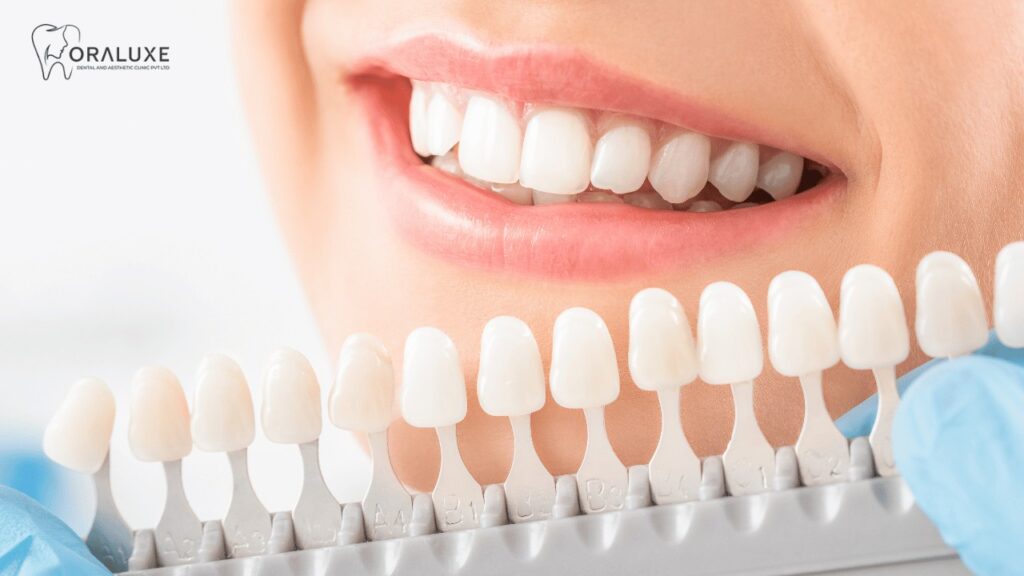
Porcelain crowns are highly aesthetic and designed to match the color and translucency of natural teeth. They are commonly used for front teeth restorations.
Ceramic Crowns
Ceramic crowns are metal-free and biocompatible, making them ideal for patients with metal sensitivities.
Zirconia Crowns
Zirconia crowns are known for their exceptional strength and durability. They are often used for molars and teeth that require strong biting support.
Porcelain-Fused-to-Metal Crowns
These crowns combine the strength of metal with the natural appearance of porcelain, providing durability and aesthetics.
Your dentist will recommend the most suitable option based on your oral health condition.
The Dental Crown Procedure: What to Expect
The process of getting a dental crown typically involves multiple steps to ensure precision and comfort.
Step 1: Dental Examination and Diagnosis
At Oraluxe Clinic, the dentist first examines the affected tooth and may take digital scans or X-rays to assess the extent of damage.
Step 2: Tooth Preparation
The damaged tooth is reshaped to create space for the crown. Any decay is removed during this stage to ensure a healthy base.
Step 3: Digital Impression
A digital scan or impression is taken to create a custom crown that fits perfectly over your tooth.
Step 4: Temporary Crown Placement
A temporary crown may be placed while the permanent crown is being fabricated.
Step 5: Final Crown Placement
Once the permanent crown is ready, it is carefully fitted and bonded to the tooth, restoring its strength and appearance.
The entire process ensures that the crown feels comfortable and functions like a natural tooth.
Benefits of Dental Crown Treatment
Dental crowns provide several long-term advantages for patients dealing with damaged teeth.
Restores Tooth Strength
Crowns reinforce weakened teeth, allowing them to function normally during chewing and biting.
Protects Remaining Tooth Structure
The crown acts as a shield that prevents further damage or fractures.
Improves Aesthetic Appearance
Modern crowns are designed to match the shape and color of natural teeth, enhancing your smile.
Long-Lasting Solution
With proper oral care, dental crowns can last for many years.
Supports Overall Oral Health
By restoring damaged teeth, crowns help maintain proper bite alignment and prevent additional dental problems.
Why Choose Oraluxe Clinic for Dental Crown Treatment in Delhi
Choosing the right dental clinic is crucial for successful restorative treatment. Oraluxe Clinic is known for providing advanced dental solutions with a focus on patient comfort and long-term results.
Advanced Dental Technology
The clinic uses modern diagnostic tools and precision techniques for accurate treatment planning.
Experienced Dental Specialists
Patients benefit from the expertise of trained dental professionals who specialize in restorative and cosmetic dentistry.
Personalized Treatment Plans
Each patient receives a customized approach tailored to their oral health needs.
Comfortable Clinical Environment
The clinic prioritizes patient comfort with modern infrastructure and professional care standards.
Focus on Natural Results
Crowns are designed to blend seamlessly with surrounding teeth for a natural appearance.
Tips for Maintaining Your Dental Crown
Proper care ensures the longevity of your dental crown and overall oral health.
- Brush and floss daily to maintain hygiene
- Avoid biting extremely hard foods
- Visit your dentist regularly for checkups
- Use a night guard if you grind your teeth
- Maintain a balanced diet to protect your teeth
Following these practices helps extend the life of your crown and prevent future dental issues.

Conclusion
Damaged or weakened teeth should never be ignored, as they can lead to more serious dental complications if left untreated. Dental crowns provide a reliable and effective solution for restoring the strength, functionality, and appearance of compromised teeth.
For patients seeking Dental Crown Treatment in Delhi, Oraluxe Clinic offers advanced restorative dentistry backed by experienced professionals and modern technology. With personalized treatment planning and a commitment to quality care, the clinic helps patients regain a healthy smile and long-term oral stability.
FAQs
1. How long do dental crowns last?
Ans. With proper care and regular dental visits, crowns can last 10–15 years or even longer.
2. Is dental crown treatment painful?
Ans. The procedure is typically comfortable as it is performed under local anesthesia.
3. Can crowns look like natural teeth?
Ans. Yes, modern crowns are designed to match the color and shape of natural teeth.
4. Do crowns require special care?
Ans. Regular brushing, flossing, and dental checkups are usually sufficient to maintain crowns.
5. Is a crown better than a filling for damaged teeth?
Ans. For severely damaged teeth, crowns provide stronger and longer-lasting protection compared to large fillings.