Laser Hair Removal in Janakpuri: Why Your Skin Type Should Decide the Technology, Not the Price
Overview
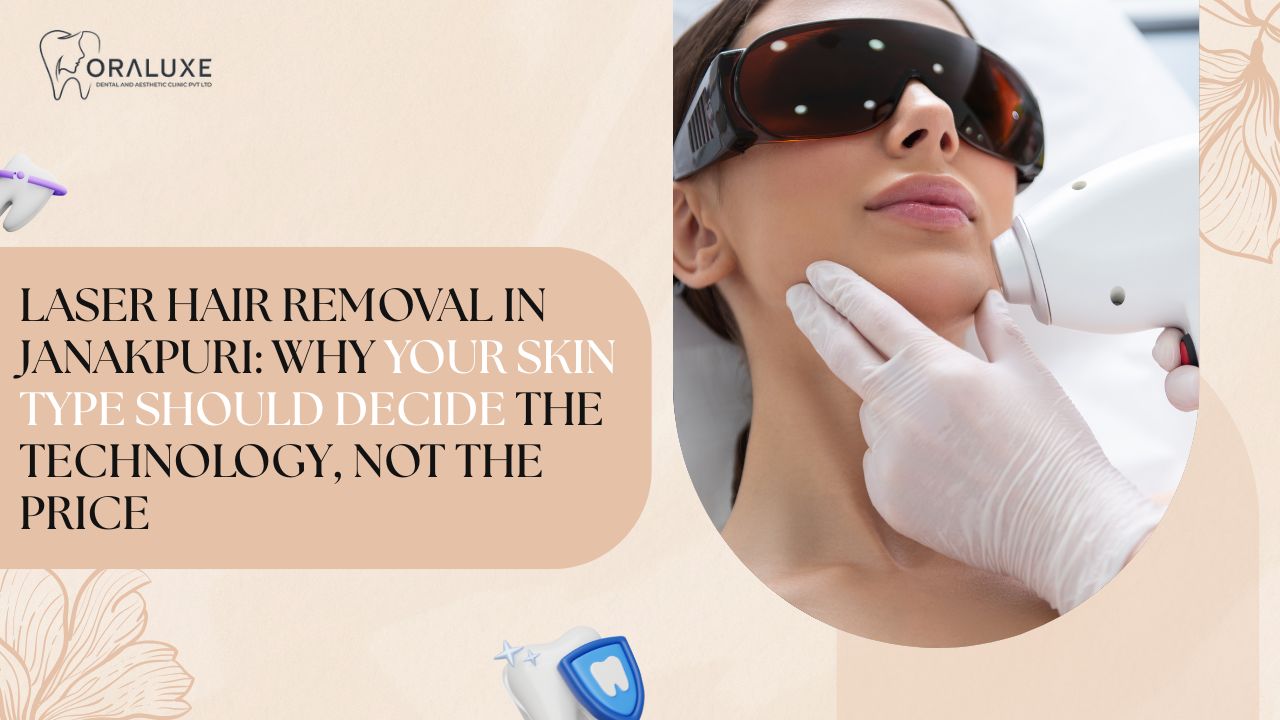
Laser hair removal is widely available across Janakpuri and West Delhi. The price range between providers is significant. And most patients deciding where to go base it primarily on cost, convenience, or a friend’s recommendation without understanding that the technology being used and how it is calibrated for their specific skin type is the factor that most determines both safety and results. For Indian skin, this is not a trivial distinction. The wrong laser or incorrect settings on the right laser produce results that range from disappointing to actively harmful. At Oraluxe Dental and Aesthetic Clinic in Janakpuri, Dr Nancy oversees laser hair removal with specific attention to the skin type calibration that makes the procedure safe and effective for Indian patients.
Why Indian Skin Makes Laser Hair Removal More Technically Demanding
The laser in hair removal targets melanin, the pigment inside the hair follicle. When the laser energy is absorbed by the follicle, it heats up enough to damage the follicle and significantly reduce its ability to produce hair. The complication with Indian skin is that melanin is not only present in the hair follicle. It is also present throughout the skin in greater quantities than in lighter skin tones. An older or poorly calibrated laser does not distinguish adequately between the melanin in the follicle and the melanin in the surrounding skin. Both are targeted, and the skin surface can be damaged alongside the follicle. Burns, post-treatment hyperpigmentation, and persistent discolouration are the typical outcomes when this happens. This is not a rare complication at clinics using inappropriate technology or poorly trained operators. It is a predictable consequence of using the wrong tool for the skin type in front of them.
Which Technologies Work for Indian Skin
Not all lasers are appropriate for Indian skin tones. A diode laser operates at a wavelength that penetrates to the follicle depth without the same surface absorption risk as older technologies. It is one of the most widely recommended options for medium to dark skin tones and produces consistent results when settings are properly calibrated for each patient. Nd: YAG laser operates at a longer wavelength that has less melanin absorption at the skin surface, making it the safest option for darker Indian skin tones and for areas where the skin is particularly reactive. IPL, which is technically not a laser but broad-spectrum light, lacks the wavelength specificity that makes diode and Nd: YAG lasers reliable for Indian skin. The surface absorption risk is higher, and the follicle targeting is less precise. Clinics offering IPL as their primary option for Indian skin are making a compromise based on equipment cost rather than clinical appropriateness. At Oraluxe, the technology and settings are selected based on the individual patient’s Fitzpatrick skin type, hair colour and density, and the specific area being treated. This calibration happens before every session, not once at the start of the course and then left unchanged throughout.
How Many Sessions Are Actually Needed and Why
Hair grows in cycles. Only follicles in the active growth phase respond to laser treatment at any given session. This is not a limitation of the technology. It is how hair biology works, and no laser can change it. Most body areas require 6 to 8 sessions spaced 4 to 6 weeks apart to catch the full cycle of follicles across multiple growth phases. Facial areas, particularly hormonal zones including the chin and upper lip in women, often need additional sessions because androgen activity continues stimulating follicle activity long after the initial course is complete. The realistic outcome from a properly completed course with good compliance is an 80 to 90 percent reduction in hair density. The remaining hair that does return is typically finer and lighter than the original growth, and maintenance sessions once or twice a year keep it manageable.
What to Do Before and After Each Session
Patients dealing with post-hair-removal pigmentation sometimes add chemical peels between sessions to keep the treated skin tone even.
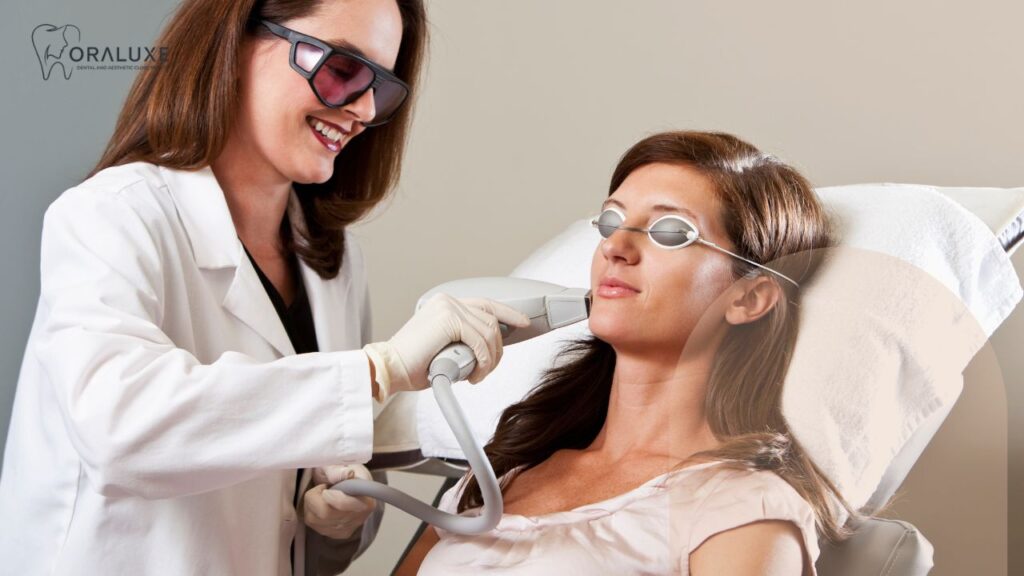
Shaving the treatment area 24 hours before each session is required. Waxing and threading remove the hair root that the laser needs to target and should not be done between sessions. Shaving is always appropriate between sessions. Avoiding sun exposure in the days before treatment reduces the surface melanin concentration in the skin, which affects how safely the laser can be calibrated. Clean skin with no products, deodorant, or makeup on the treatment area is needed for each session. After each session, some redness and mild sensitivity settle within a few hours. Treated hairs shed over the following two to three weeks, which looks like growth initially but is the follicle expelling the damaged hair. Sun protection on treated areas is essential in Delhi’s climate throughout the treatment course. For patients at Oraluxe managing multiple aesthetic concerns alongside laser hair removal, treatments including HydraFacial MD, chemical peels, and skin tightening can be coordinated with laser sessions depending on the areas being treated.
Conclusion
Laser hair removal in Janakpuri works for Indian skin when the right technology is used and settings are calibrated properly for each patient’s skin type. Choosing where to go based on price alone without understanding whether the clinic uses appropriate technology for Indian skin and whether the person operating it understands the calibration required is where most disappointing or harmful outcomes begin. The technology should suit the skin, not the other way around.
Frequently Asked Questions
Q. How far apart should laser hair removal sessions be at Oraluxe in Janakpuri?
Body areas are treated every 4 to 6 weeks. Facial areas every 3 to 4 weeks. The spacing reflects the hair growth cycle in each area rather than a fixed schedule applied uniformly.
Q. Can laser hair removal cause permanent skin darkening on Indian skin?
Post-treatment hyperpigmentation is a risk when incorrect settings or inappropriate technology are used. Using the appropriate laser with properly calibrated settings and consistent SPF after each session reduces this risk significantly. At Oraluxe, this calibration is done individually for each patient.
Q. Is laser hair removal at Oraluxe suitable for all skin tones?
Yes. Oraluxe uses technology appropriate for Indian skin tones with individual calibration before every session. Darker skin tones that require more conservative settings are accommodated without compromising on safety.
Q. Can I get laser hair removal and other skin treatments at Oraluxe on the same visit?
Depending on the areas and treatments involved, some combinations are possible in the same session. Others need to be scheduled separately. Dr Nancy advises on what can be combined and what requires separate appointments.
CTA
Book a Laser Hair Removal Consultation at Oraluxe, Janakpuri