
Overview
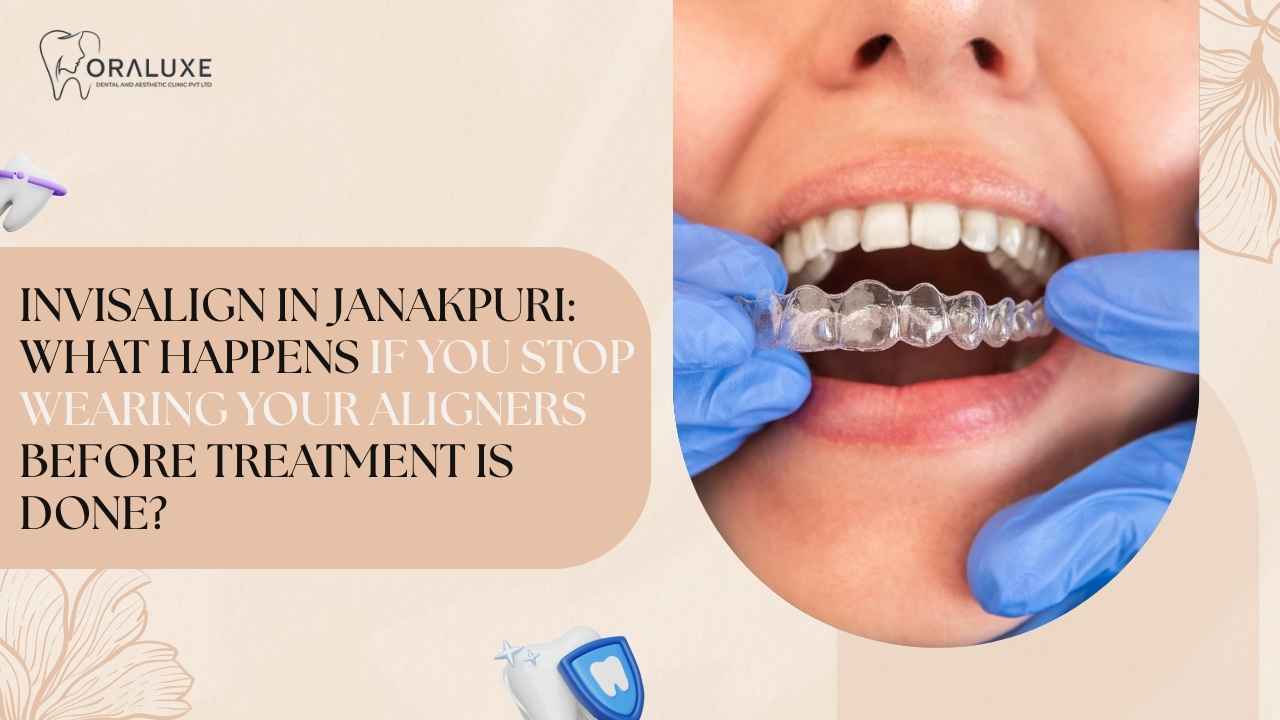
Invisalign is one of the most popular orthodontic treatments in India right now and for good reason. The appeal is obvious. No metal brackets. No dietary restrictions. The ability to remove the trays for photos, events, or meals without anyone knowing you are in treatment. But that removability, which is one of Invisalign’s biggest advantages, is also the reason some patients end up disappointed with their results. The treatment only works when the aligners are being worn, and the consequences of inconsistent wear are more significant than most people realise going in. At Oraluxe Dental and Aesthetic Clinic in Janakpuri, Dr Ashwani Kumar and Dr Nancy are experienced Invisalign providers who cover exactly this before treatment begins so patients understand what the commitment actually involves before they commit to it.
How Invisalign Actually Moves Teeth
Clear aligner treatment works by applying controlled, precise forces to specific teeth through a series of custom-fabricated trays. Each tray is slightly different from the previous one and moves one or more teeth by a small, planned amount. The next tray picks up from where the previous one left off with those teeth and continues the movement. Over the course of the full series, teeth shift progressively into the planned final position. The keyword is progressively. Teeth do not move in large jumps. They move incrementally, with each tray representing a small, specific stage of the overall plan. When a tray is not being worn for the required number of hours, the planned movement for that stage does not happen completely. The next tray, which assumes the previous movement was completed, does not fit correctly. This compounds through subsequent trays, creating a growing discrepancy between where the teeth are and where the trays expect them to be.
What Happens When Aligner Wear Is Inconsistent
The first thing most patients notice when wear has been inconsistent is that a new tray feels tighter than it should. This is because the teeth have not moved fully into the position that the tray was designed to fit. Forcing the tray over an incompletely moved tooth applies unplanned force in the wrong direction, which can cause discomfort and, in some cases, move teeth in ways that were not part of the original treatment plan. Extended periods of inadequate wear can result in treatment needing to be restarted from a new set of refinement aligners, adding time and cost to what was planned as a defined course. In significant cases, the treatment cannot be completed with aligners alone, and a transfer to conventional orthodontic treatment becomes necessary to achieve the planned result. This is not a hypothetical outcome. It happens regularly in practices that do not set clear expectations about wear compliance before treatment begins. At Oraluxe, the compliance conversation is part of the initial consultation rather than a reminder sent when problems emerge.
The 20-to 22 Hour Rule and Why It Is Not Flexible
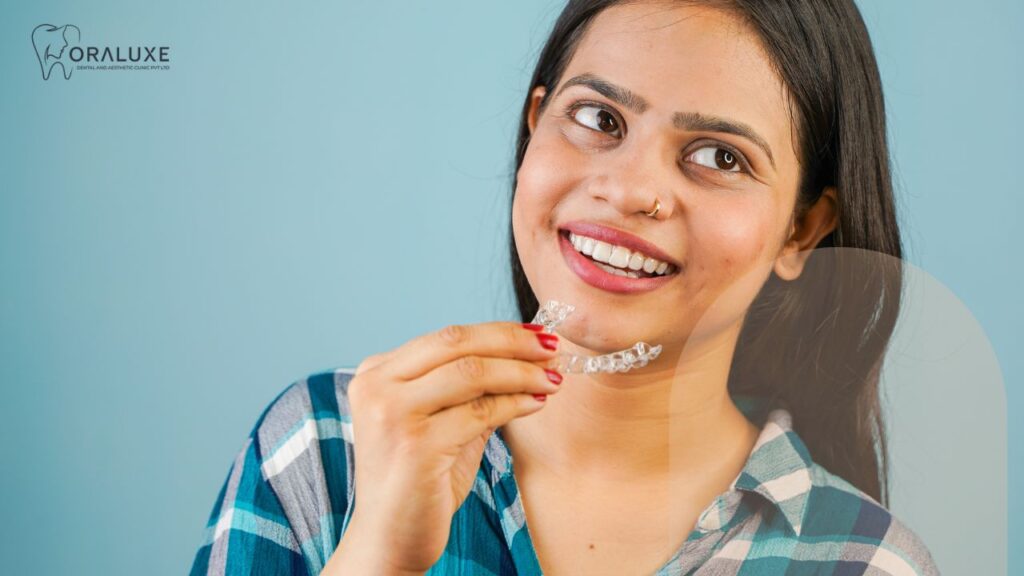
Invisalign requires 20 to 22 hours of wear per day. This number is not conservative marketing. It reflects the minimum daily wear time for the aligner material to maintain the planned tooth movement forces effectively. Below this threshold, the material spends too much time away from the teeth, and the cumulative movement per tray is insufficient for the next tray to seat correctly. In practice, this means aligners are removed only for eating, drinking anything other than water, and brushing and flossing. They go back in immediately afterward, not after finishing a coffee slowly, not when getting back to the office, immediately. Patients who genuinely commit to this find the treatment progresses predictably and the results match the digital treatment plan they were shown at the start. Patients who treat the wear schedule as approximate end up with a longer, more complicated treatment course than necessary.
When to Switch From Invisalign to Braces
Some cases are not ideally suited to Invisalign from the start. Significant rotations, severe crowding, complex bite corrections, and cases requiring precise torque control of specific teeth are areas where conventional orthodontic treatment produces more predictable results. Dr Ashwani and Dr Nancy assess each case at the initial consultation and discuss honestly whether Invisalign is the best option for the specific tooth arrangement or whether conventional braces would produce a more reliable outcome for that patient. For patients who want fixed treatment without visible brackets, lingual braces placed on the inner surface of the teeth are an option worth discussing alongside Invisalign. After any orthodontic treatment, a smile design consultation can address colour, shape, and any remaining cosmetic concerns that alignment alone does not resolve. Veneers or dental crowns placed after alignment is complete produce the most stable and natural-looking cosmetic results.
Retainers After Invisalign: The Step Most People Underestimate
Once alignment is complete and stable, some patients use the opportunity to explore a broader smile design plan alongside their new retainer routine.
Completing the aligner series does not mean the treatment is finished. Teeth move back. This is not a failure of the treatment. It is the nature of the periodontal ligament that holds teeth in place. Without retainers worn consistently after treatment, the teeth gradually shift toward their original positions over months and years. Most patients require retainers worn full time initially, transitioning to nights only after several months. Long-term compliance with night retainer wear is what maintains the result of the aligner treatment. At Oraluxe, retainer planning is discussed as part of the treatment package rather than addressed as an afterthought at the end of the aligner series.
Conclusion
Invisalign works when it is worn. The results from a properly completed course of aligner treatment with good compliance are genuinely excellent. The results from inconsistent wear are disappointing and sometimes require additional time, additional cost, or a switch to a different treatment method to resolve. Understanding this before starting is what separates patients who are satisfied with their Invisalign outcome from those who are not.
Frequently Asked Questions
Q. Can I switch from Invisalign to braces mid-treatment at Oraluxe in Janakpuri?
Yes. If the clinical situation requires it or if the patient prefers a fixed option, a transfer to conventional orthodontic treatment is possible. Dr Ashwani discusses what the transition involves and what it means for the overall treatment timeline.
Q. How does Oraluxe monitor Invisalign progress during treatment?
Appointments are scheduled every 6 to 8 weeks to assess tooth movement against the planned trajectory, check tray fit, and address any concerns. Additional appointments are arranged if a tray is fitting poorly or movement is lagging behind the plan.
Q. Can Invisalign fix a bite problem alongside crowding at Oraluxe?
Invisalign can address mild to moderate bite discrepancies alongside alignment. Significant bite issues involving substantial vertical or jaw discrepancy are better managed with conventional orthodontics or a combined approach. This is assessed at the initial consultation.
Q. What happens to my smile design plan if I need refinements after Invisalign at Oraluxe?
Refinements extend the treatment timeline but do not affect the final planned outcome. Smile design and any cosmetic work, including veneers or whitening, are planned after the orthodontic result is stable to ensure the cosmetic work is built on a settled foundation.
CTA