
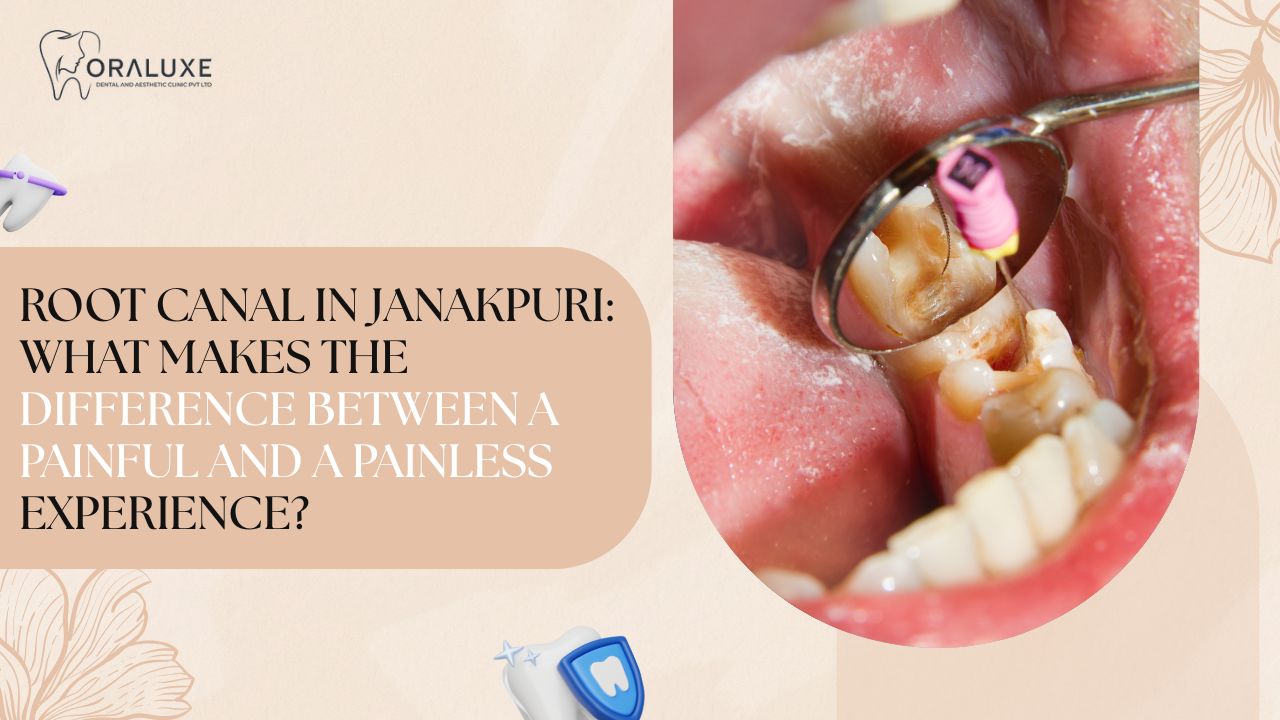
Overview
The fear of root canal treatment is one of the most widespread anxieties in dentistry. People postpone appointments for weeks, sometimes months, because of what they expect it to feel like. And yet most patients who finally go through with it at a well-equipped clinic say the same thing afterward: it was nothing like what they had imagined. So what is actually happening in the clinics where root canals are genuinely painless versus the ones where it is not? The answer is not about the procedure itself. Root canal treatment is the same biological process everywhere. The difference is in the anaesthesia technique, the equipment used, the operator’s experience, and the overall approach to patient comfort before anything begins. At Oraluxe Dental and Aesthetic Clinic in Janakpuri, Dr Ashwani Kumar and Dr Nancy prioritise patient comfort as a clinical requirement rather than a marketing promise.
Why Root Canal Has Such a Painful Reputation
Fear is not invented. It comes from real experiences, mostly from a different era of dentistry. Decades ago, root canal treatment involved manual instruments that were slower, less precise, and required more time inside the tooth. Anaesthesia was less reliable. Sessions were long. And the patient had very little control over what was happening. People who went through it told their story, and that story became the version everyone carries around today. What has changed is significant. Modern rotary instrumentation cleans canals faster and more precisely than manual files. Better anaesthetic agents work more reliably and completely. Digital imaging reveals canal anatomy in detail before treatment begins. And sedation options exist for patients whose anxiety makes even modern techniques feel unmanageable. The version of root canal most people fear does not reflect what happens at a clinic that is properly equipped and staffed by experienced practitioners.
What Actually Makes Root Canal Painful When It Is
When a root canal is painful, it is almost always because of one of three reasons. Inadequate anaesthesia is the most common. A tooth with an active infection is harder to numb than a healthy tooth because the pH environment around an inflamed nerve affects how local anaesthetic binds. Experienced practitioners know this and adjust their technique accordingly, using supplemental blocks or modified injection approaches to achieve full anaesthesia before proceeding. Proceeding without confirming complete numbness is where most painful root canal experiences begin. Slow or imprecise instrumentation is the second factor. The older manual filing technique is time-consuming and involves more physical manipulation of the canal. Rotary nickel-titanium instruments used at Oraluxe are faster, produce less vibration, and remove less healthy tooth structure than manual techniques. Patient anxiety amplifying sensation is the third. Anxiety lowers the pain threshold, and a tense patient and expecting pain reports more discomfort from the same clinical stimulus than one who is relaxed and prepared. Addressing this before the procedure begins is as important as the technical execution.
How Oraluxe Approaches Painless Root Canal in Janakpuri
The approach at Oraluxe begins before the first instrument is picked up. Dr Ashwani Kumar explains the procedure clearly and addresses patient concerns before treatment starts. The area is fully anaesthetised and confirmed to be numb before any canal work begins. Rotary instrumentation means the active phase of the procedure is faster and produces significantly less vibration and sensation than the older technique. The combination of reliable anaesthesia, modern instruments, and experienced hands is what produces the outcome most patients describe as surprisingly manageable. For patients with significant dental anxiety, additional comfort options are available and worth mentioning at the time of booking so the appointment can be structured appropriately. After the root canal is complete, a dental crown is placed to protect the tooth and restore its full function. This is not optional. A root canal-treated tooth without a crown is significantly more vulnerable to fracture because the tooth becomes more brittle without its internal blood supply. If the tooth situation is more complex, dental implants or full-arch rehabilitation may be part of the broader treatment discussion.
What Happens After a Root Canal That Most Patients Do Not Expect
Most root canal-treated teeth need a dental crown afterward to protect the now more brittle tooth structure from fracture.
The procedure itself is comfortable. The day after can be mildly sore, which surprises people who were told it would be painless. The soreness is not from the canal work. It is from the surrounding tissue responding to the instruments that were working in and around the tooth. It is mild, temporary, and managed easily with standard over-the-counter pain relief. Most patients describe it as nothing compared to the toothache that brought them in. Patients sometimes ask about smile design or veneers once their tooth is restored, particularly when the crown stage allows them to address the overall appearance of that area of the smile alongside the restorative work.

When Should You Stop Waiting and Book
If a tooth has been aching on and off for more than two to three weeks, if hot or cold sensitivity is intense and lingers after the stimulus is removed, if there is swelling in the gum near a specific tooth, if a tooth has become noticeably darker than its neighbours, or if sharp pain has settled into a dull constant ache, waiting is making things worse. Infection in a tooth does not resolve on its own. Antibiotics reduce the spread temporarily but do not eliminate the source. The longer treatment is delayed, the more involved the procedure becomes, and in some cases, the tooth is lost entirely because the infection has progressed too far to save it. A straightforward root canal today is a significantly better outcome than a complex extraction and implant treatment later. The surgical and non-surgical extraction that follows a failed tooth is avoidable in most cases when the root canal is addressed early.
Conclusion
Painful root canal treatment is not inevitable. It is a product of inadequate anaesthesia, outdated technique, and insufficient patient preparation. At a clinic where all three of these are taken seriously, the experience is genuinely manageable. Most patients at Oraluxe in Janakpuri leave wondering what they were so worried about.
Frequently Asked Questions
Q. How long does a root canal take at Oraluxe in Janakpuri?
Most root canals are completed in one to two sessions. Complex cases with curved or multiple canals may require an additional visit. Dr Ashwani discusses the expected number of appointments at the first consultation.
Q. Is root canal treatment safe during pregnancy?
Elective dental treatment is generally deferred during the first trimester and late third trimester. Emergency treatment, including a root canal for active infection, is safe during pregnancy when necessary. Inform the clinic of pregnancy before booking.
Q. What happens if I keep delaying root canal treatment?
The infection spreads. Bone around the root tip is progressively destroyed. What could have been a straightforward procedure becomes more complex, and in some cases, the tooth cannot be saved, making extraction and implant treatment the only remaining options.
Q. Can a root canal-treated tooth be part of a smile design at Oraluxe?
Yes. Once a root canal-treated tooth has a crown placed, it can be included in a smile design plan. Dr Nancy discusses this during the cosmetic consultation to ensure the restored tooth matches the broader aesthetic goals.
CTA